Website & AI-powered platform
2026
RemaxZam.ae — Investment property platform
A property platform where buyers browse Dubai listings and get a written investment brief in the same session. Placeholder deck — replace with one sentence about the result.
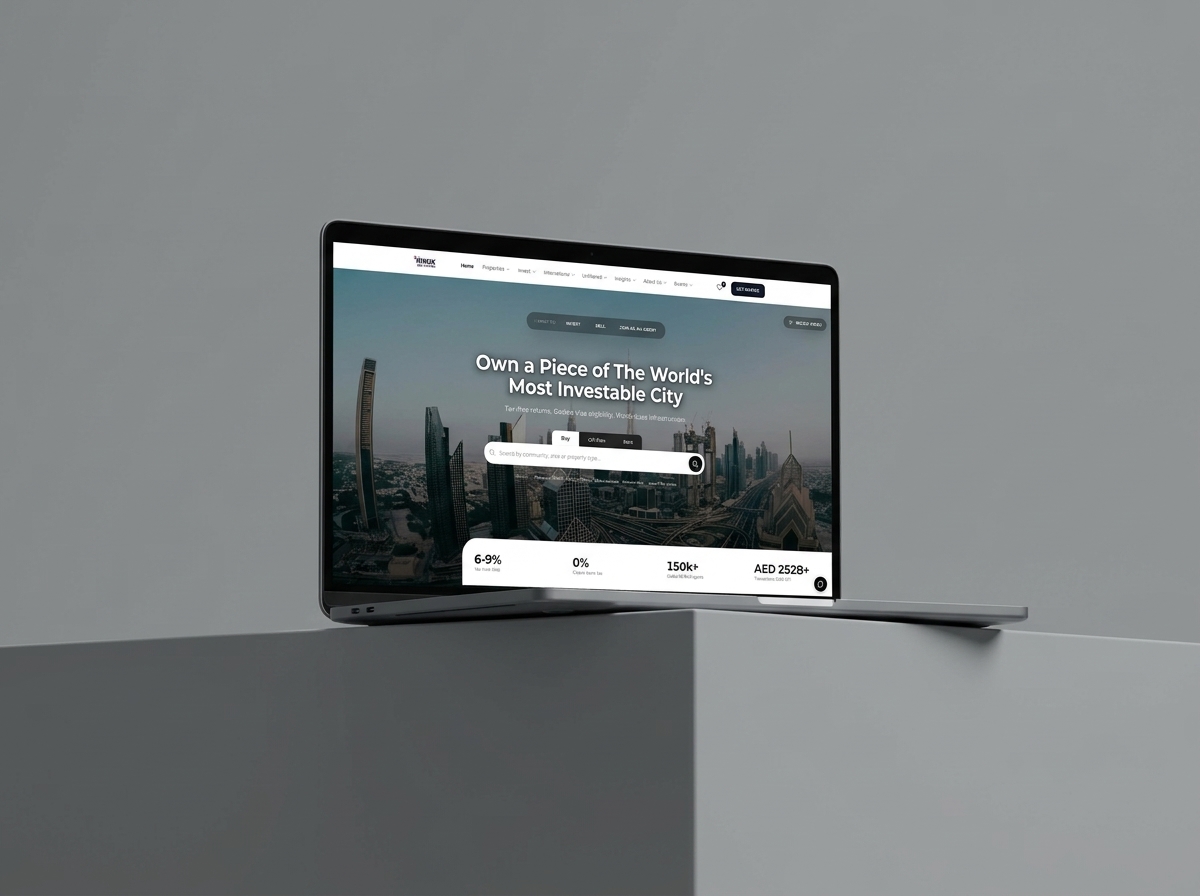
Remax Zam sells Dubai property to buyers who are usually doing this for the first time, often from another country. The old site was a catalogue: listings, photographs, a phone number. Everything a buyer needed to decide was somewhere else — a PDF from the developer, a WhatsApp thread, a spreadsheet a friend had made.
The brief was to close that gap. Not another listing portal, but a place where browsing turns into understanding: what the building is, what the payment plan actually costs, and whether the numbers make sense for a particular buyer.
The problem
Investment decisions were being made on vibes and screenshots. The information existed, but it was scattered across developer brochures, and every buyer asked the sales team the same four questions: what is the yield, what do I pay up front, when is handover, and what happens after that.
Every buyer asked the same four questions. The site answered none of them.
Constraints
That ruled out hand-written investment summaries for every unit. Whatever we built had to generate the analysis from structured listing data, and stay honest when a field was missing.
Approach
We settled on a single reading pattern: browse, compare, then read one brief. Listings stay deliberately plain — price, area, handover, payment plan — because the interesting work happens when a buyer opens a property and the page assembles a case for or against it.
- Listings modelled as structured data first, pages second, so the same numbers feed cards, filters and briefs.
- A comparison view that keeps three properties on screen without turning into a spreadsheet.
- AI-written briefs grounded in listing fields, with the source numbers shown beside every claim.
The build
The brief generator was the risky part. Early versions produced confident paragraphs from thin data, which is worse than no paragraph at all. We ended up treating missing fields as a first-class case: the brief changes shape when a payment plan is unknown, rather than inventing one.
Everything else is ordinary, deliberately. Server-rendered pages, image optimisation at the edge, and a design system of rules and type rather than cards and shadows — the same visual grammar as this site, so the platform and the portfolio do not feel like two different companies.
Outcome
- Longer sessions on listing pages (placeholder)
- 3.4×
- Repeat questions to the sales team (placeholder)
- −41%
- Concept to launch (placeholder)
- 12 wks
Placeholder reflection — one honest paragraph on what you would do differently. The template reads better when the last section is a person talking, not a results table.